
Learning at Home
Families play an important role in children’s learning and development. At East Dene Primary School, we want supporting learning at home to feel simple, enjoyable and meaningful.
Home learning in Early Years does not mean recreating school lessons. Everyday experiences such as talking together, sharing stories, playing games, cooking, shopping and exploring the world provide valuable opportunities for children to develop their knowledge, language and skills.
By sharing what children are learning and providing carefully chosen resources for home, we can work together to help children revisit, practise and build upon their learning.
Talking Together
Communication and language provide important foundations for children’s learning. One of the most valuable things families can do is simply talk with their child.
Talk about what you are doing, where you are going and what you notice. Introduce new words naturally and explain what they mean. Give your child plenty of time to think and respond, listen carefully to their ideas and build upon what they say.
Songs, nursery rhymes, imaginative play and telling stories together are also wonderful ways to develop children’s listening, understanding, vocabulary and confidence in communicating.
More information
Please see the Tiny Talkers website for more advise and tips on how to support your child with their Communication and Language.- https://tinytalkers.co.uk/rotherham/#tinytalkers
Reading Together
We want every child at East Dene to develop a love of books and reading.
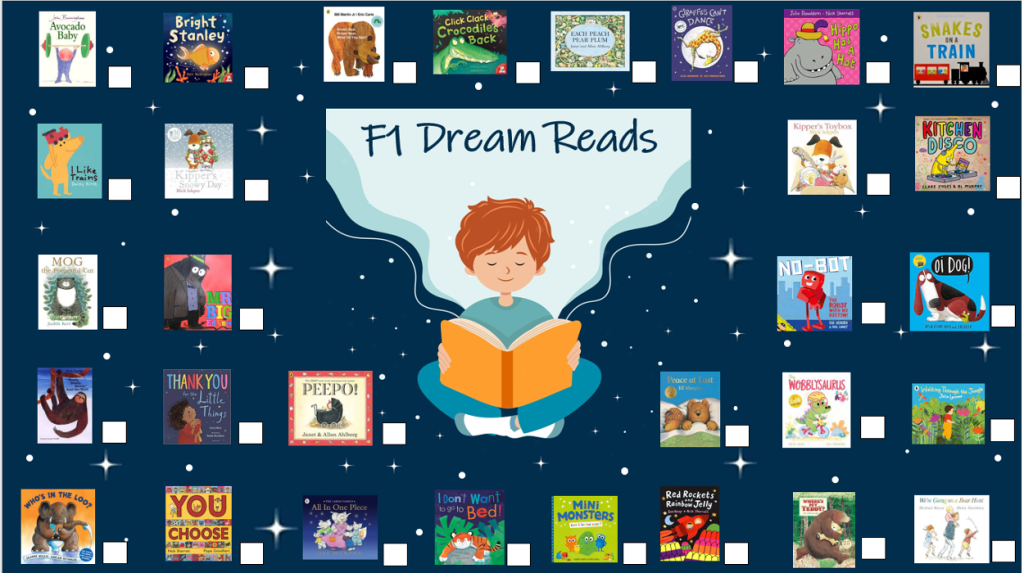
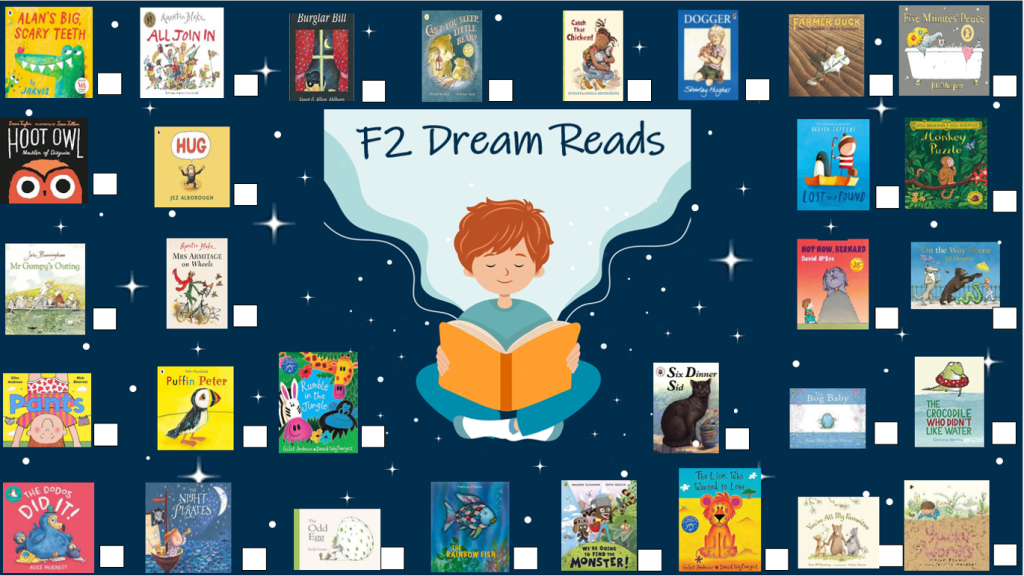
Across F1, F2, Y1 and Y2, children bring home our Dream Read story books. These high-quality stories have been carefully chosen for each year group for an adult to read aloud and enjoy with their child at home.
Children will bring home one Dream Read each week to share with you. At the end of the week, simply return the book to school and your child can swap it for a new story to enjoy together.
Dream Reads give children access to wonderful stories beyond those they are able to read independently. Families can enjoy the story together, talk about the pictures and characters, explore new vocabulary and revisit favourite books again and again.
Regularly hearing stories read aloud helps children develop their language, vocabulary, comprehension and knowledge of the world, while showing them that reading is something to enjoy.
F1 Dream Reads:
F2 Dream Reads:
Phonics and Learning to Read
Phonics in F1
Children’s journey towards becoming readers begins long before they can read a book independently. In F1, children develop important foundations through stories, songs, rhymes, listening and playing with sounds.Here you can find videos to watch at home which will support your child in N1 or N2 to develop these skills:
Phonics in F2
In F2, children are taught to read systematically through Read Write Inc. Phonics.
When children are ready, they bring home Read Write Inc. phonics books to read to an adult. These books are carefully matched to the sounds and words children have been taught at school, giving them an important opportunity to practise their reading, build fluency and become increasingly confident and independent readers.
Watch this video to see how to pronounce the sounds that your child will learn through Read Write Inc:
Watch the video to see how to support your child to read Read Write Inc storybooks at home:
Children will also be sent home with a QR code so that you can watch the Read Write Inc virtual classroom videos together, that will be chosen specifically to target your child’s next steps.
Our two approaches to reading at home have different but complementary purposes. Dream Reads are read by the adult to the child, developing enjoyment, vocabulary, comprehension and a love of books. Read Write Inc. books are read by the child to an adult, enabling children to practise and apply the phonics they have been taught.
Together, these experiences help children develop both the desire to read and the skills to become successful readers.
Early Writing and Fine Motor Skills
Children’s journey towards writing begins with developing the physical skills, language and confidence they need to communicate their ideas.
Everyday activities such as drawing, colouring, painting, using playdough, threading, building, completing puzzles and using scissors help children develop the strength, control and coordination needed for writing.
Give children meaningful reasons to make marks and write. They might draw a picture, make a shopping list, write a birthday card, create a sign or label something they have made.
Celebrate children’s attempts and encourage them to talk about what they have created. Early marks and drawings are an important part of the journey towards becoming a confident and increasingly independent writer.
Maths in Everyday Life
Maths is everywhere, and everyday family routines provide lots of opportunities to explore mathematical ideas together.
Count the stairs, spot numbers when you are out, compare which objects are bigger or heavier, look for shapes in the environment, share food between people, help with cooking or talk about the order of events during the day.
Simple games involving dice, dominoes, cards, matching, counting and turn-taking are also valuable. Encourage children to talk about what they notice, explain how they know and explore different possibilities.
Learning Through Everyday Experiences
Children learn an enormous amount from the everyday experiences they share with theirfamilies.
Cooking, shopping, gardening, travelling, visiting the park, caring for pets and helping with jobs at home can all provide valuable opportunities to develop children’s language, knowledge, independence and curiosity.
Encourage your child to notice what is happening around them, ask questions, explore and talk about their experiences. Supporting learning at home does not require expensive resources or worksheets. Everyday life is full of opportunities to talk, explore, discover and learn together.
Connecting Home and School
Each half term, we’ll send home a newsletter which will contain information about whatyour child is learning in school in, including some of the key vocabulary, stories and experiences they will be exploring.
You can use this to chat about their learning at home, practise some of the new words they have learned and make links to things you do together as a family.
Here are the newsletters for this half term: